

Properly sizing a gas fire pit system requires matching your burner’s total BTU rating with the correct pipe diameter, fuel pressure (WC), and valve hardware. Use this technical master guide to calculate supply line requirements, select correct burner orifices, and troubleshoot pressure drops or flame noise across natural gas and liquid propane setups.
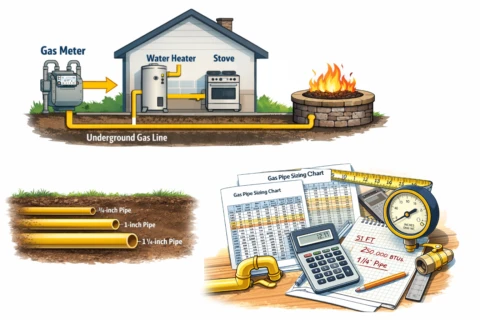
1. Gas Hard Piping & Line Diameter Sizing
Running a gas line over 50 feet requires larger pipe diameters to prevent severe pressure drops and undersized flames. Matching your total BTU requirement to the correct pipe length ensures safe, maximum burner performance.
Read the Gas Hard-Piping Size Guide →
2. How Fire Pit Gas Systems Are Sized
Understanding total gas volume (CFH) and inlet pressure is critical before installing a high-BTU burner. Learn how key system components work together to deliver consistent fuel pressure under load.
Learn How Gas Systems Are Sized →
3. Burner Orifice Sizes & Air Mixer Valves
The burner orifice regulates gas flow to achieve target BTU ratings. For propane setups, pairing the correct orifice with a properly sized air mixer valve is essential for clean combustion and preventing soot.
Check Fire Pit Orifice Size Specs →
4. Optimizing Flame Height
Weak or low flame height is almost always a symptom of undersized gas lines or improper regulator settings. Calculate expected flame outputs based on your available line pressure.
See Flame Height & Pressure Troubleshooting →
5. Eliminating Gas Line Whistling & Noise
Whistling sounds are caused by high-velocity gas passing through sharp flex line corrugations or restrictive fittings. Discover how non-whistling flex hoses eliminate high-pitch whistle entirely.
Fix Whistling Fire Pit Noise →
6. Gas Supply Diagnostic & Troubleshooting Checklist
Systematic diagnostic steps for unlit burners, flickering flames, automatic safety valve shut-offs, and gas pressure drops under full load across key fire pit ignition systems.
View Full Troubleshooting Checklist →
Required Hardware & Sizing Components
Ensure your system meets local safety codes and delivers full BTU performance with commercial-grade connection hardware:
Complete Gas Hookups:
- Browse full-flow key valves, flex lines, and heavy-duty gas connection kits
- Shop precision-drilled air mixer valves
- See published BTU ratings across HPC Fire’s lightweight concrete fire pit collection