

As an authorized dealer for both HPC Fire (HPC) and The Outdoor Plus (TOP), we work closely with two of the leading manufacturers of nozzle-based fire pit burners. Their Torpedo and Bullet burner lines use patented nozzle jet technology to create taller, more dynamic flames than traditional burners. A common question we hear from customers is simple: which one is right for my fire pit?
This guide breaks down the engineering differences, cost considerations, and real-world applications of each system to help you choose the right high-performance “engine” for your outdoor fire feature.
Quick Comparison Summary
For readers who need the essential facts fast, here is a summary of the key differences:
| FEATURE | TOP BULLET BURNER | HPC TORPEDO BURNER |
|---|---|---|
| Flame Height | Approx. 18 inches | Approx. 22 inches |
| Air Mixer Valve | Not required | Installed beneath the burner |
| Nozzle Visibility | Visible just above the media | Less visible flush with media |
| Material | Stainless/Brass or All-Brass | 304 Stainless Steel Only |
To explore the full range of each burner technology, you can view our Bullet Burner collection and Torpedo Burner collection for available sizes, materials, and configurations.
7 Technical Differences That Matter
1. Flame Height and Engineering
Both Torpedo and Bullet burners feature precision nozzles that deliver accelerated pre-mixed gas and air, resulting in higher velocity and taller flames than those from traditional drilled-port burners.
Based on guidance from the manufacturers’ Technical Teams, and assuming correct installation and adequate gas supply, the main difference between the two systems is flame height.
- HPC Torpedo Burner: Expected flame height is about 22 inches.
- The Outdoor Plus Bullet Burner: Expected flame height is approximately 18 inches.
Note: These are guidance figures. Real-world results always depend on the gas supply pressure, ventilation, altitude, and correct media installation.

2. Air Mixing – The Key Technical Difference
This section covers the most important installation and aesthetic distinction between the two products: how each burner mixes air and gas.
Bullet Burners from The Outdoor Plus
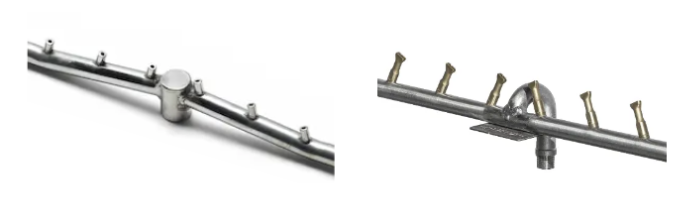
The patented nozzle is designed without the need for a venturi, otherwise known as an air mixer, typically used for introducing air into the fuel to help maximize its combustion.
- No separate air mixer valve is required for either natural gas or propane installations.
- Design Note: The fire media (glass or lava rock) should be set below the burner tips to keep them clear. As a result, the Bullet Burner’s brass nozzles are visible in the finished fire pit.
Video Demonstration of the TOP Bullet Burner
HPC Fire Torpedo Burners
HPC Fire’s design uses an entirely different approach.
- Air mixing is handled by a separate Air Mixer installed at the base of the burner, below the fire pit pan or plate. This component is essential and gas-type specific, as fuel-to-air requirements differ between propane and natural gas. This approach is particularly beneficial for propane installations, where precise air-to-fuel mixing supports cleaner combustion and can help reduce sooting while improving flame performance.
- The nozzles on the burner ring can sit nearly flush with the fire media, as long as the outlets are not blocked.
- Design Note: The sleeker tip design yields a more discreet appearance, with only small stainless steel tips visible.
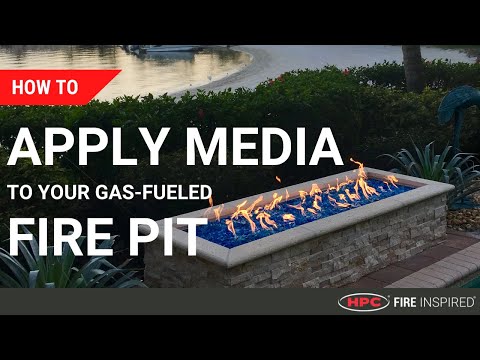
Video Guide of the HPC Torpedo Burner with Fire Media
3. Water Ingress Mitigation and Drainage Design
Outdoor fire pit burners must effectively manage water exposure to protect internal gas components and maintain a clean, dry combustion pathway for long-term durability, reliability, and performance.
Both The Outdoor Plus and HPC Fire address water ingress through design and engineering, with a focus on drainage and preventing water from entering the gas feed. Both manufacturers integrate weep holes into their burner designs to avoid water accumulation and pooling. The primary distinction lies in the design of the gas hub.
The Outdoor Plus – Aqua-Guard Design
Since early 2025, The Outdoor Plus has incorporated its patented Aqua-Guard feature across the Bullet Burner line. This design routes the gas supply into the burner hub from above rather than below, reducing the likelihood of water entering the gas system and providing protection for downstream components.
One practical consideration of the Aqua-Guard design is that the gas inlet is no longer centered on all burners. For example, on linear models, the inlet is now offset. When retrofitting into an existing pan with a centrally located gas inlet, this may require drilling a new inlet location to maintain the flame’s central position within the pan.
HPC Fire – Raised Hub Design
All HPC Fire Torpedo Burners feature a centrally located, raised hub that directs water downward and away from the burner inlet toward integrated weep holes in the burner ring. This design allows moisture to drain safely out of the system, preventing water from traveling back through the burner and into the valve train.
HPC Torpedo Burners are well-suited for retrofitting into existing fire pit pans.
4. Material Construction and Durability
Both manufacturers provide robust, high-quality products built to withstand the elements, with both lines protected by a Lifetime Burner Warranty.
| FETAURES | TOP BULLET BURNER | HPC TORPEDO BURNER |
|---|---|---|
| Material | Stainless-Brass Hybrid (Stainless Steel ring & Brass nozzles) or All-Brass (Premium option). | 304 Stainless Steel throughout. |
| Durability | All-brass units may require more frequent cleaning and maintenance in environments with high salt content or high humidity. | Highly resistant to corrosion, ideal for coastal or high-moisture environments with minimal maintenance. |
5. Flame Shape and Efficiency Clarified
Flame Shape
Aside from the height difference, the patterns are very similar, both offering a fuller, more voluminous flame compared to traditional burners.
- Circular, rectangular, and square layouts: Nozzles are aimed slightly inward, creating a gently tapered flame profile.
- Linear layouts: Nozzles are oriented to create a continuous “curtain” or wall of flame.
- H-Style layouts: Nozzles are oriented toward the opposing burner leg, creating a wider flame base that visually converges above the centerline.
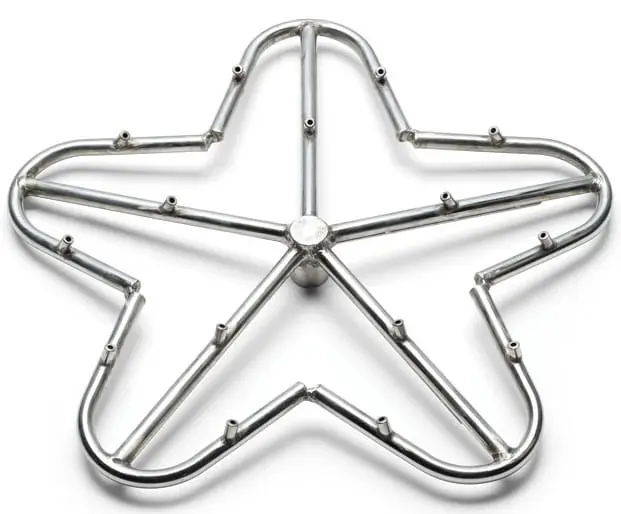
A Stainless steel Torpedo Penta Burner
Efficiency Claim
The early marketing claims of “twice the height – half the gas” caused confusion. More accurately, nozzled burners optimize performance per BTU better than traditional burners. Let’s take a look:
Every gas burner has a BTU/hr rating, a measurement of the energy it uses per hour. An equivalent-sized nozzled burner will produce a higher, more dramatic flame than a traditional burner, allowing for two practical gas consumption efficiency scenarios:
- Equivalent Flame, Less Gas: The flame height of a nozzled burner can be adjusted to match the flame aesthetic of a traditional burner. This means you can significantly reduce overall gas consumption for everyday use, while still maintaining the option to open the taps for full flame drama!
- Same Height, Smaller Burner: Alternatively, you can downsize to a physically smaller, lower-BTU nozzled burner without impacting the flame height. The reduced BTU rating lowers gas consumption, and this downsizing is ideal for installations with a restricted gas supply or projects requiring a smaller burner footprint.
Note: A nozzle-style burner will not fix a starved gas supply. Supply must match demand!
6. Pricing Comparison
Prices vary by size, material, and design. The table below compares the prices of stand-alone burners (without fittings, pans, or ignition kits) as of October 2025.
The comparison below is between the HPC Stainless Steel Penta Torpedo Burner and the TOP Stainless Steel Round Bullet Burner. Both provide a round flame footprint.
| Burner Size (Diameter) | TOP Round Bullet Burner | HPC Penta Torpedo Burner |
|---|---|---|
| 12 inch | $216 | $153 |
| 18 inch | $406 | $199 |
| 48 inch | $1,594 | $424 |
Price differences reflect several factors, including material selection, burner layout complexity, overall weight, and each manufacturer’s air-mixing design.
Burners with similar physical dimensions may differ significantly in output and resulting gas consumption. For example, the HPC 12″ Penta is rated at 100,000 BTUs, and the 48″ version is rated at 350,000 BTUs. The Outdoor Plus 12″ single-ring round bullet burner is rated at 65,000 BTUs, while the 48″ quad-ring model is rated at 630,000 BTUs.
Please note: Prices shown are representative examples at the time of writing and may vary by size, configuration, and specification.
7. Availability and Custom Options
Both HPC Fire and The Outdoor Plus offer their burners as standalone components or as part of complete fire pit packages. These bundled systems simplify the ordering process and help ensure compatibility between components.
Packages are available in a wide range of configurations and may include the burner, pan, ignition system, fittings, and suitable gas connections. Ignition options include match-lit, push-button spark, flame-sensing, and electronic ignition systems.
For an overview of how these components are commonly combined, see our gas fire pit kits.
For projects with specific dimensions, output, or design requirements, both manufacturers also offer custom burner solutions.
If you’re planning a custom fire pit or need guidance selecting the appropriate package, burner, ignition system, or help with BTU ratings and gas supply, our team can assist you. You may use the Contact Us form or call the toll-free number listed at the top of this page.
Final Verdict: Which High-Performance Burner Should You Buy?
Both the HPC Torpedo Burner and the TOP Bullet Burner are premium choices that offer strong flame performance and a lifetime warranty. Your final decision depends on three primary factors: budget, flame visibility, and material preference.
Choose the Torpedo Burner If…
- Your primary goal is the tallest possible flame – Up to 4 inches taller at comparable sizes.
- You prioritize a minimalist, less visible look – The nozzles sit nearly flush with your fire glass, hiding the “engine” of the fire pit.
- Your budget is a primary concern – The Torpedo Burner has a more accessible price point.
Choose the Bullet Burner If…
- You prefer the look of brass components – The hybrid version features visible brass tips.
- You desire a premium, all-brass construction – Distinct aesthetic with top-tier durability – See our full Bullet Burner Review here.
- You need greater design flexibility – Bullet Burners offer the widest range of layouts and configurations.
Practical Selection Tips
- Check Gas Supply Early: Size the gas line and regulator to the burner’s BTU rating before placing your order. An undersized line will ruin the performance of any burner.
- Coastal Installs: While both are durable, stainless steel requires less maintenance than brass in high-salt environments.
Please note: The specifications and pricing shown are based on manufacturer information available at the time of publication and may change without notice. Actual performance, including flame height, depends on proper installation and meeting all manufacturer requirements. Always follow the installation manual.