

Installing a gas fire pit in your backyard can transform your outdoor space into a cozy retreat. While the process isn’t overly complicated, it does require attention to detail. After all, you’re working with open flames, pressurized gas, and your home. Getting it right is crucial for safety, performance, and long-term reliability.
In this guide, we’ll walk you through everything you need to know about installing a gas fire pit outdoors. From essential decisions to safety considerations, we’re here to provide you with clear answers to help you plan effectively and avoid costly mistakes.
What Counts as a Gas Fire Pit Installation

Gas fire pit installation goes beyond just placing a burner and connecting a fuel source. A proper setup involves several important factors, including:
- Selecting the right fuel source
- Ensuring proper clearances and surface materials
- Planning the gas line routing and sizing
- Addressing ignition and electrical requirements
- Complying with local permit and inspection regulations
Remember, installing a gas fire pit is generally considered a permanent improvement in most areas. Once you hard-pipe gas, it becomes part of your property’s infrastructure, so it’s essential to get it right from the start.
Choosing Between Propane and Natural Gas
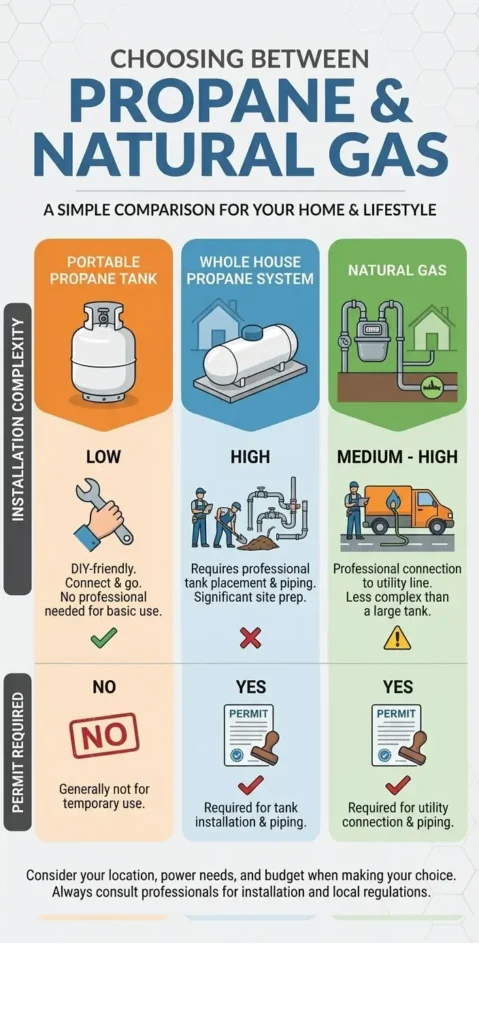
When it comes to fueling your outdoor gas fire pit, you typically have three options: portable propane tanks, whole-house propane systems, and natural gas. Each choice comes with its own set of installation requirements and long-term implications.
Portable Propane Tank Fire Pits
These fire pits use standard propane tanks, which are often stored inside the fire pit base. Here are some perks:
- No permanent gas line needed
- Easiest installation option
- Lower initial costs
- Requires occasional refilling or tank exchanges
This option is ideal for patios and temporary setups, offering a straightforward way to enjoy a gas fire pit with minimum hassle.
Whole House Propane Systems
If your home has a large external propane tank supplying multiple appliances, you can connect your fire pit using a permanent gas line. Here’s what to keep in mind:
- Professional gas line installation is necessary
- No need to manage portable tanks
- Higher upfront costs
- Common in rural areas
This installation process is quite similar to that of natural gas, although it involves different pressure and regulator requirements.
Natural Gas Fire Pits
Natural gas fire pits connect directly to the home’s gas supply.
- Continuous fuel availability
- Lower long-term fuel cost
- Permanent outdoor gas fire pit installation
- Permits and inspections are usually required
This option is ideal for fixed outdoor living spaces where you don’t plan to relocate the fire pit.
Fire Pit Placement and Clearance Rules
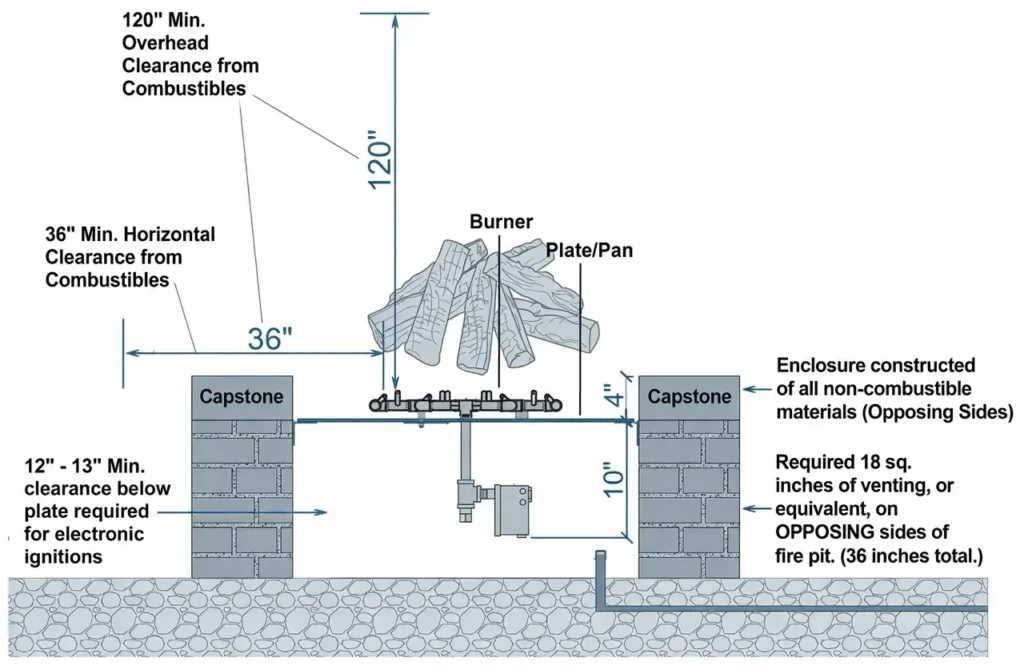
Placement is one of the most critical—and often misunderstood—aspects of gas fire pit installation. Key clearance considerations include:
- Distance from structures
- Overhead clearance from roofs and pergolas
- Separation from doors and windows
- Clearance from combustible furniture
Most manufacturers provide minimum clearance guidelines; however, local codes may call for even stricter distances. Always adhere to the more stringent requirements. Additionally, keep in mind that airflow is just as important as distance. Poor airflow can lead to incomplete combustion and a buildup of soot.
Surface and Base Requirements
Your gas fire pit needs a stable, non-combustible surface. Approved surfaces generally include:
- Concrete
- Stone
- Brick
- Approved paver systems
Be cautious with wood decks, as they often require extra protection and may have restrictions. Installing a gas fire pit on a combustible surface without proper isolation can lead to common inspection failures. Don’t forget about drainage; burner pans should be designed to shed water to prevent corrosion and ignition issues.
Gas Line Planning and Sizing
One of the trickiest aspects of an installation is gas line sizing. Key factors include:
- Total BTU load
- Distance from the gas source
- Pipe diameter
- Gas pressure
Undersized gas lines can lead to weak flames and ignition problems, while oversized lines without proper regulation can damage components. This is one area where hiring a licensed professional is highly recommended.
Ignition Systems and Electrical Needs
Gas fire pits typically feature one of four ignition types:
- Manual match light
- Push button spark
- Flame Sensing systems (Battery powered)
- Electronic ignition (Requires Power)
For electronic systems, you may need:
- Electrical supply
- Weather-rated wiring
- Access panels for servicing
When installing a gas fire pit with electronic ignition outdoors, ensuring moisture protection is essential.
Permits, Codes, and Inspections
Most permanent gas fire pit installations require permits. Common triggers for permits include:
- Hard piped gas
- Electrical connections
- Structural modifications
Skipping permits can create serious issues during resale or insurance claims. Plus, inspection approval safeguards you from unsafe installations by unqualified contractors.
DIY vs Professional Installation
While some parts of gas fire pit installation can be tackled as a DIY project, others should be left to the professionals. Here’s a quick breakdown:
DIY may be acceptable for:
- Portable propane fire pits
- Cosmetic assembly
- Burner media placement
Professional installation is recommended for:
- Gas line work
- Pressure testing
- Electrical connections
- Permit coordination
If you’re installing a gas fire pit with a permanent fuel source, enlisting the help of a professional is strongly advised.
Common Installation Mistakes
Certain mistakes pop up time and again in gas fire pit installations. Here are a few to watch out for:
- Ignoring manufacturer clearance rules
- Undersizing gas lines
- Blocking burner airflow
- Skipping drainage
- Using indoor-rated components
- Underestimating how much gas is available from your Nat. Gas home supply
Each of these oversights can lead to safety issues or subpar performance.
Safety and Long-Term Maintenance
A properly installed gas fire pit requires minimal maintenance, but it’s not zero maintenance. Follow these best practices:
- Annual inspection
- Burner cleaning
- Checking fittings for leaks
- Keeping ignition components dry
Routine maintenance not only extends the lifespan of your fire pit but also ensures safe operation.
Frequently Asked Questions
Can I convert a propane fire pit to natural gas?
Sometimes. Only if the burner and valve are rated for conversion.
Do I need ventilation outdoors?
Yes. Open air does not eliminate airflow requirements.
Is installing a gas fire pit worth it?
When installed correctly, it adds usability and value without constant upkeep.